
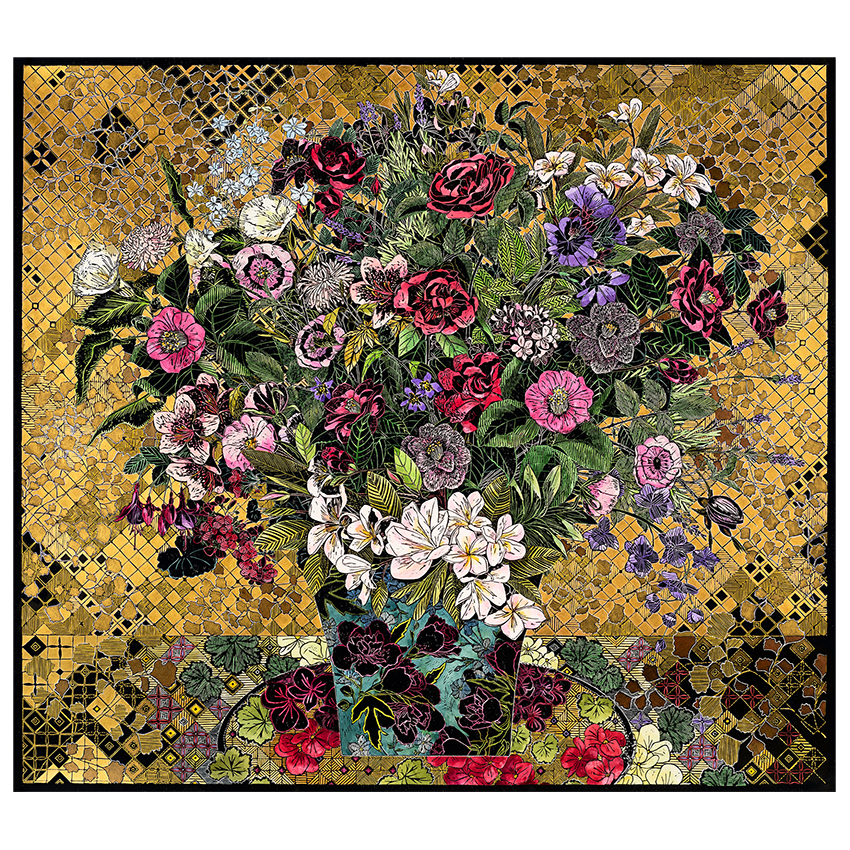
Christine Druitt Preston: Ephemeral Beauty – A Second Life!
“Christine Druitt Preston’s Ephemeral Beauty – a second life reflects on the fragility of memory, place, and human connection through luminous works that reimagine the fleeting beauty of flowers.”
Christine Druitt Preston’s practice occupies a distinctive position within contemporary Australian printmaking and painting, one that negotiates the intersections of memory, place, and the everyday. Her sustained interest lies in how domestic interiors and cultivated gardens operate as repositories of both private and collective histories—sites where identity is constructed, nurtured, and eventually relinquished. In her hands, the ordinary becomes a locus of quiet reflection, charged with the emotional weight of human presence and absence.
The artist’s recent body of work, Ephemeral Beauty – a second life, emerges from the profound rupture occasioned by the passing of her mother in 2024. While the transient beauty of flowers provides the exhibition’s central motif, Druitt Preston extends this symbolism toward broader considerations of time, fragility, and impermanence. Here, the flower—long employed in Western art history as a vanitas emblem—becomes both subject and metaphor: a reminder of mortality, but equally, a gesture towards renewal, resilience, and the persistence of memory.
The works are not botanical illustrations in any conventional sense. Rather, they operate as elegies and offerings—poetic attempts to hold stillness within an accelerating world. They embody the paradox at the heart of Druitt Preston’s practice: that fragility, once acknowledged, becomes a form of strength, and that what slips away leaves behind traces capable of shaping memory, identity, and belonging.
In positioning flowers as both subject and metaphor, Druitt Preston contributes to a wider discourse within contemporary art that reclaims the decorative, the domestic, and the intimate as legitimate and vital grounds for critical reflection. Ephemeral Beauty – a second life thus stands as both personal memorial and universal meditation, situating the artist’s practice within a lineage of still-life traditions while also asserting its relevance to present-day conversations around place, memory, and the passage of time.